7 principles for reducing costs in warehouse planning
A good warehousing planning scheme should aim to achieve fast and accurate flow of goods within the warehouse at the lowest possible cost. To achieve this goal, Paixun Intelligence integrates an integrated strategy of artificial intelligence, smart logistics, information technology, intelligent warehousing, and cost control.
So, what aspects should logistics planning for warehousing systems start from? Here are a few points for reference, but the principles are not fixed and should be determined according to specific situations. In order to make better designs, these principles can be selected and modified.
01. Principle of System Simplification
It is necessary to standardize packaging and logistics containers according to logistics standardization, and to form standardized storage and transportation container units for bulk goods and irregularly shaped goods. This will achieve coordination between container units and transport vehicles in terms of load capacity and effective space size, container units and loading and unloading equipment, and container units and storage facilities. This will facilitate the coordination and cooperation of various links in the storage system. When transferring between different locations and other operations, there is no need to change containers, which improves universality, reduces handling operation time, reduces loss and damage of goods, saves costs, simplifies loading and unloading subsystems, reduces system operation and maintenance costs, improves system reliability, and enhances the efficiency of storage operations.
02. Principles of graphic design
Unless otherwise specified, logistics in the warehousing system should be implemented on the same plane to reduce unnecessary safety measures, minimize the use of low efficiency and high energy consumption lifting machinery, and improve system efficiency.
03. Principle of Separation between Logistics and Information Flow
Modern logistics is supported by computer networks, and the combination of logistics and information flow solves the problem of controlling the flow of logistics, improves the accuracy of system operations, and thus enhances the efficiency of system operations. If the early separation of logistics and information flow cannot be achieved, it is required to set up corresponding logistics information reading devices at each node of the logistics system, which will inevitably cause redundancy and increase the cost of the system; If the early separation of logistics and information flow can be achieved, the required information can be identified at once and then transmitted to various nodes through computer networks, which can reduce the cost of the system.
04. Principle of Flexibility
The construction of warehouses and the purchase of storage equipment require a large amount of funds. In order to ensure the efficient operation of the warehousing system, it is necessary to configure targeted equipment; The changes in the social logistics environment may also lead to changes in the variety, specifications, and business scale of stored goods. Therefore, when planning, attention should be paid to the flexibility of mechanical and mechanized systems and the possibility of expanding warehouse operations.
05. Principle of minimum number of material handling times
Whether manually or automatically, each material processing requires a certain amount of time and cost. By combining operations, reducing unnecessary movement, or introducing equipment that can complete multiple operations simultaneously, the number of processing times can be reduced.
06. The principle of minimizing movement distance and avoiding crossing logistics routes
The shorter the movement distance, the lower the time and cost required; Avoiding cross logistics routes can solve the problems of cross logistics control and material waiting time, and maintain smooth logistics.
07. Principle of Cost and Benefit
When constructing warehouses and selecting storage equipment, investment costs and system efficiency principles must be considered. Minimize investment while meeting homework requirements.
13 principles for on-site warehouse management and location planning
The setting and optimization of storage locations (also known as cargo or storage areas) is the fundamental work for warehouse planning and operations.
Optimizing the location of goods can reduce the cost of goods handling, decrease the loss of goods during storage and handling, thereby reducing the cost of logistics business itself and increasing revenue.
01. Based on turnover rate and ABC classification
Among various warehousing operations, the most time-consuming and labor-intensive is usually the handling and walking. Therefore, when determining the location of the goods, the first consideration should be to reduce the walking path and bring frequently entering and exiting items closer to the entrance and exit, otherwise they should be kept away. Retail warehouses usually have small quantities and large quantities of goods when entering the warehouse, while when leaving the warehouse, they are mostly dismantled. Therefore, for such warehouses, the first consideration is to have high turnover goods close to the export. The ABC classification principle widely recognized in the warehousing industry can be seen as an extension and refinement of the turnover principle. Its main approach is to use different storage and picking methods for items with different shipping frequencies, which has achieved good results in practice. The unplanned nature of the e-commerce industry makes it difficult to implement this principle.
02. Product relevance rules
In inventory, some varieties are often ordered simultaneously, and these related goods should be stored in adjacent locations as much as possible to shorten the picking path. We can identify the correlation of inventory goods by analyzing historical order data. It should be noted that the correlation will vary with the sales season.
03. Rule of Product Identity
The meaning of this rule is: the same item should be stored in the same location, abbreviated as one item, one location, because storing an item in multiple locations will increase the workload of shelving, picking, inventory and other operations. Due to the frequent changes in the flow of goods in and out of modern distribution centers, it is not easy to achieve one location for each item in practical operations.
04. Product Similarity Rule
Similar items refer to items with similar main attributes, such as soybeans and mung beans. This rule requires storing similar items adjacent to each other, which is the commonly used classification storage method. When the functionality of the warehouse management information system is weak, classified storage can greatly reduce the difficulty of manual management, but sometimes it may reduce space utilization and increase picking paths, so it is necessary to be flexible when using this rule.
05. Product complementarity principle
This rule requires interchangeable items to be stored close to each other so that one can be replaced with another when it is out of stock. This rule has a narrow applicability because warehouses usually cannot modify orders. For long-term supply and demand partners, this can be done under pre agreed conditions.
06. Product compatibility rules
Compatibility refers to the degree of tolerance for storing items together. For example, items with personalized requirements for smell are incompatible. Typical examples are perfume and tea. The compatibility rule is one of the fundamental reasons for classified storage, and the difficulty in its implementation lies in how to occupy less space and spend less money.
07. First in, first out rule
This rule requires the goods that are stored first to be released first, usually applicable to goods with a shorter shelf life, such as food. If the storage location and inbound/outbound process are not carefully planned, it is generally difficult to achieve first in, first out, otherwise it will occupy more storage space and space. Drugs should be stored and distributed according to GSP regulations based on production batches, which is also unique to their operations.
08. Stacking height rule
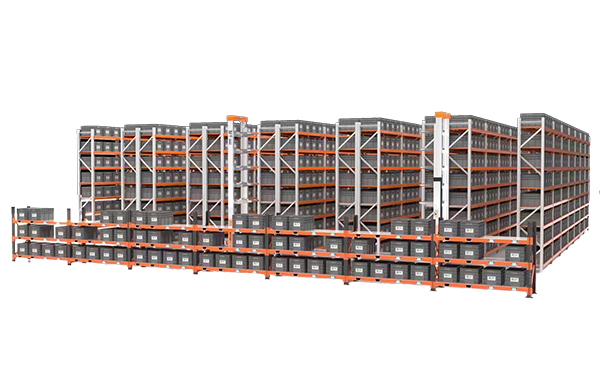
The stacking rule states that in order to improve the utilization of warehouse space, goods should be stacked as high as possible for storage. Simply stacking boxes one by one is not conducive to selective pickup and cannot be stacked very high, resulting in multiple layers of high-level shelves. There are many types of multi-level high-level shelves, each with its own scope of application and requiring different loading and unloading machinery.
09. Weight characteristic rule
This rule requires us to arrange storage locations according to the weight of the goods. Usually, heavy objects are placed downwards and light goods are placed upwards. In addition, the difference between mechanized and manual handling should also be considered. Heavy objects transported manually should be stored below the waist, while the storage position for mechanized handling can be higher, with specific heights matching different machinery and shelves.
10. Facing the Law of Channels
This rule tells us that in order to facilitate and speed up the storage and retrieval of goods, they should be placed facing the aisle. The identification numbers, names, etc. of goods and storage locations should also be placed in easily visible locations near the passage. Similarly, goods with high shipping frequency should be stored near the main channel.
11. Product size rules
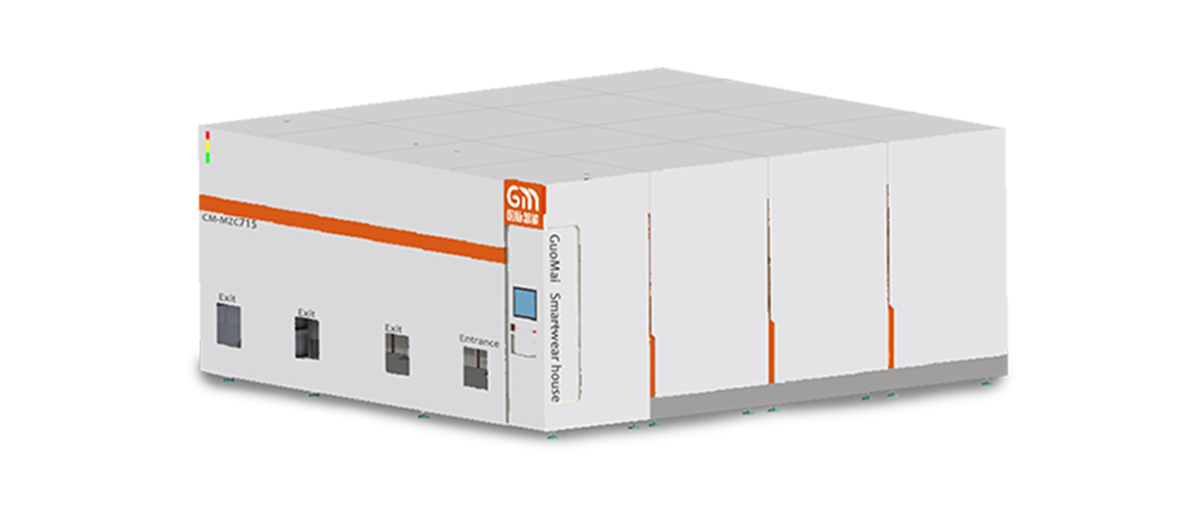
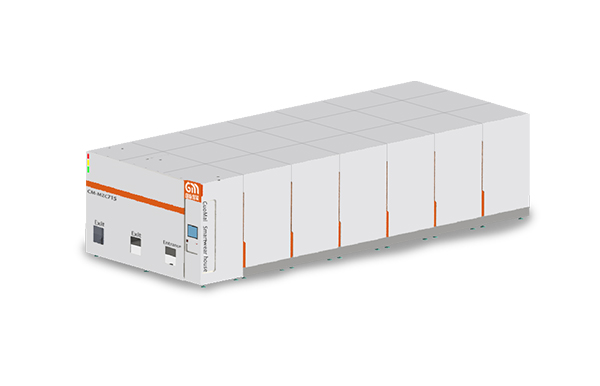
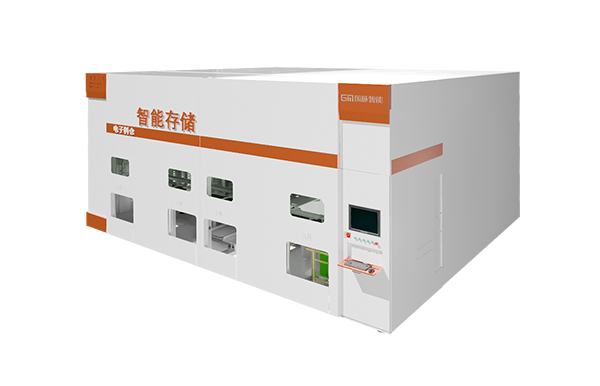
This is the basic principle of cargo space planning, which requires designing the corresponding cargo space size according to the different sizes of the goods. This rule is also a basis for selecting shelf types, which can be used to choose pallet stacking, crossbeam shelves, layer shelves, storage cabinet shelves, and so on. In the SMT manufacturing workshop, Paixun Intelligent adopts self-developed SMT intelligent warehousing equipment for edge storage, which can design the internal structure of the warehouse according to the material size.
12. Storage representation rule
The storage location representation rule is also one of the basic rules of storage location planning, which requires the use of simple, standardized, and unique methods to represent storage locations. At present, most warehouses use a combination of letters and numbers to represent information such as cargo areas, channels, arrangements, layers, and grids. A concise location representation can greatly simplify warehouse management for goods with vastly different characteristics.
13. Explicit rule
Because location management is the foundation of warehouse management, location information is the most basic information required for warehouse operations. Therefore, location information must be clearly marked, which is very effective in improving the efficiency of warehouse operations. You can use size tags, kanban boards, position indicator lights, electronic display screens, and so on.