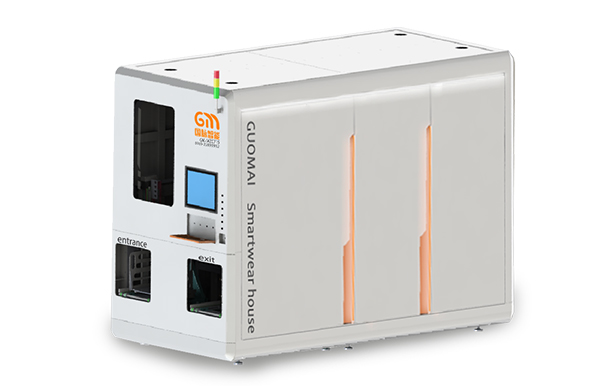
The basic requirements for standardized warehouse management should be: fixed storage locations, uniform labeling, complete items, and standardized filling.
In real warehouse management, we often hear about situations where wrong materials or mixed materials are sent. Looking into the reasons, I believe that there is inevitably a subjective element of carelessness on the part of the storage personnel, and the most important and objective factor should be the unclear location and labeling of the goods. For example, if we assign a warehouse keeper to pick up goods from a certain location, and he goes to the wrong location or picks up the wrong item, it is entirely due to human factors. If he neither found the wrong location nor read the wrong label, but took the wrong thing, then it's a management issue.
Similarly, if you only tell a warehouse keeper to go to the warehouse they manage to find a certain specification and model of product, without telling them the location of the item, then it should depend on the custodian's sense of responsibility and business level. If he has a strong sense of responsibility, even if he doesn't recognize the goods, he knows that the item is waiting for him in a certain location. Because he doesn't recognize the goods, he will make a record when they land and give the item a special mark; He has a high level of technical expertise and is also well-organized in management. He can easily choose one from many and identify differences in different specifications and models of the same material without making mistakes. From this, it is not difficult to see the importance of location and labeling in warehouse management.
Location and identification management is an inevitable way to standardize warehouse management
The main content of standardized warehouse management is the division of storage locations and stacking placement of materials, which cannot be separated from specific storage locations. Once the materials are stored in the warehouse, the first thing to solve and clarify is the storage location. After the storage location is determined, the materials can be loaded, unloaded, and landed to reduce unnecessary repeated transportation. Similarly, the landing of goods must have clear markings for easy management, achieving consistency among accounts, cards, goods, and funds. At this point, we naturally cannot do without what we often call "Number Four Positioning", "Five Five Placement", and "Three Cleanliness and Four Alignment".
From this perspective, the reason why various errors occur in daily management is due to the chaotic management of storage locations and unclear labeling. On the contrary, clear management of storage locations and identification not only greatly improves work efficiency and reduces paper-based management and related costs through manual or automatic data collection and electronic data processing in daily management, but also reduces unavoidable errors in manual input and processing through automatic processing, laying a good foundation for standardized warehouse management.
Storage location and identification management are inevitable requirements for standardized warehousing management
The basic requirements for standardized warehouse management should be: fixed storage locations, uniform labeling, complete items, and standardized filling. Standard storage location and identification, even if the warehouse personnel have never seen a certain material, as long as they know how to obtain the storage location of the material and can recognize the identification, they can accurately and quickly find the corresponding material. By combining modern logistics equipment and information technology, integrating identification management with material information management system, rapid product information tracking and tracing can be achieved through simple operation of specific application systems, improving consumer satisfaction.
The reason why the global unified identification system can quickly and accurately exchange information with trading partners through standard electronic messages in the fastest and most accurate way is to connect the information of various nodes in the logistics supply chain together, track the entire process of products from production to sales, and put enterprises in a favorable position in fierce market competition. The fundamental reason is that the global unified identification system has achieved the unity of logistics and information flow, through which various links of modern logistics can be effectively managed. Therefore, the standardization of warehouse management first requires the standardization of storage location and identification management. As long as we achieve standardized management of storage locations and identification, and integrate it with the material information management system, the warehousing, distribution, and tracking of products will become simple and easy to implement. By strengthening on-site material management and standardizing stacking and placement, the implementation of standardized warehousing management will no longer be difficult.
Location and identification management is an inevitable result of refined warehouse management
Adopting barcode technology in automatic recognition technology, it has the characteristics of fast data collection speed, high accuracy, low cost, easy operation, global standardization, and the identified information can adapt to the supply chain. Therefore, for the refined management of warehousing, we first need to start with the division and designation of material storage locations, standardized identification formats, and content filling. Only when the storage locations are clear and the identification is accurate, can we further achieve the refinement of deep level management and realize the barcode and standardization of storage location and identification management.
Location and identification management is a necessary means of modernizing warehouse management
The significance of the application of barcode technology for logistics lies in the combination of logistics and information flow. In the era without the application of barcode technology, whether it is manual or computer systems, there is a problem that the probability of errors in operation is very high. Such as inbound and outbound inventory, inventory process, etc. This is due to the disconnect between logistics and information flow, which makes it easy to make errors when generating information corresponding to logistics. After the formation of barcode technology, the application of barcodes in material management greatly reduces the possibility of errors. Moreover, barcodes can ensure the accuracy and uniqueness of data, making them convenient and fast to use. Especially the global unified identification system, it connects enterprises with the supply chain. No matter where you are in the world, using the global unified identification system and barcode management system, you can quickly and accurately exchange information with trading partners through standard electronic messages in the fastest and most accurate way. It connects the information of various nodes in the logistics supply chain together, tracks the entire process of product production to sales, and puts enterprises in a favorable position in fierce market competition.
In summary, in warehouse material management, barcode technology can be used to collect and process relevant information such as the variety, quantity, and shelf life of goods stored in each shelf location. Through barcode technology, no matter where the goods in the warehouse flow, as long as combined with barcode management of product packaging and outbound information, the flow of items can be automatically recorded, and the inventory situation can be monitored at any time. And the barcode can also be combined with wireless networks. For example, during the warehousing process, the custodian can use a wireless handheld terminal to receive inventory or stocking instructions from the business center, and use the terminal to scan the barcode to complete the inventory or stocking work, facilitating physical and financial management, and easily tracing the procurement, inbound and outbound status, and acceptance and quality inspection data of a batch of materials, simplifying the inventory work. By combining the material management information system with physical inventory, it is easy to obtain the inventory status of materials, query the location of materials, and perform automated inventory balancing and dynamic profit and loss accounting management. It can be seen that the modernization of warehouse management still relies on the management of storage locations and labeling.
Several suggestions for warehouse location and identification management
1. Unify the allocation of cargo locations. Unify the planning of the current material yard and shed storage locations, re divide them, define the division criteria and intervals, and prevent warehouse managers from arbitrarily arranging storage locations. Strict location management is implemented for the inbound and outbound of goods, gradually promoting the application of barcode management technology to achieve real-time location queries and dynamic allocation and management, achieving real-time connection between inventory management front-end applications and material receiving and dispatching operations, and minimizing error rates. To promote the standardization and normalization of warehouse management, and to facilitate accurate early warning and rapid response in conjunction with electronic monitoring and alarm systems.
2. Unified identification format. We will unify the format and required project content for material data labels, gradually explore the introduction of barcodes into material identification, and achieve real-time querying of stored locations by scanning product barcodes. At the same time, we will allocate or dynamically define storage locations based on inventory location information. Dynamically allocate human and material resources based on the batch of incoming and outgoing goods, fully utilize resources, improve system efficiency, and reduce resource waste. To achieve the integration of physical inventory management and material information management system, and promote the automation of inventory counting and refined management.
3. Clear identification management and barcode based product management. Divide responsibilities for the filling, maintenance, and replacement of identification content, and achieve standardized storage locations and barcode management. Barcode is the unique identifier of goods, and the foundation of modern business management (including warehouse management systems) is the barcoding of goods. Combining with the current material management information system, by developing a comprehensive inventory counting function for the system, random inspections can be conducted by warehouse, partition, and location. Specific types of inspections can also be carried out regularly to conduct comprehensive inventory checks of the entire warehouse system.
4. Regular maintenance and management. One is to regularly maintain the boundary markings of the designated cargo locations, and the other is to regularly maintain or update the identification signs. Ensure real-time location query and dynamic allocation and management of storage locations.
If the storage location is clear, label it clearly, and if the label is clear, manage it. Clear and standardized storage locations, as well as clear and accurate labeling, are the foundation of warehouse management. With the application of modern logistics technology and the continuous improvement of information technology and warehouse management level, the efficiency of warehouse operation and management will be greatly improved, the time for managing location information in the existing mode will be greatly reduced, the accuracy of inventory query and counting will be improved, the circulation speed of inbound and outbound documents will be greatly accelerated, and the waste of human, financial, and material resources will be reduced.