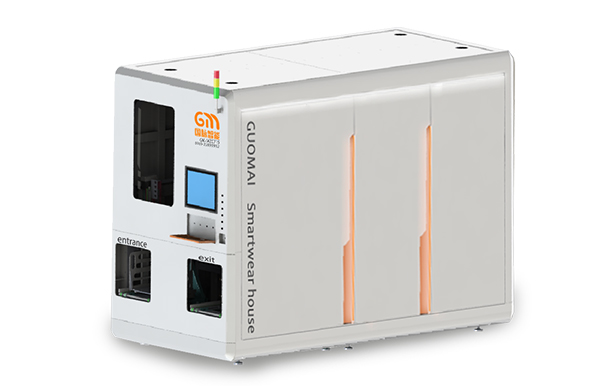
Warehouse Management System (WMS)
1、 The Warehouse Management System (WMS) mainly has the functions of providing external information sharing, internal information management, and accepting instructions from higher-level systems.
1. External information sharing mainly connects the production execution system (MES) and company management system (such as SAP) outside the system to provide real-time inventory information to relevant departments such as production, procurement, planning, and finance. Some companies will provide information to suppliers so that they can understand the inventory situation and provide corresponding supply services.
2. Internal information management is mainly reflected in managing inventory product information, including model, quantity, product supplier, incoming time, shelf life reminder, goods location, etc.
3. Execute instructions from the higher-level system, mainly by executing MES instructions and providing corresponding production materials to the production line according to production plan requirements.
4. When designing intelligent warehouse integration, if you do not have the ability and experience to develop warehouse management systems yourself, you can choose to outsource to professional suppliers or professional individuals for writing. Personal service providers are relatively cheaper, but the risk increases accordingly.
2、 Characteristics of Warehouse Management System (WMS):
1. Support refined and visual management of warehousing for multiple shippers, warehouses, goods, and batches
2. Integrate and support modern warehousing operation modes such as barcode scanning, RF operations, electronic tag operations, and voice picking
3. Configurable and scalable system workflow, adapting to the development and continuous optimization of enterprise business models
4. Support seamless integration with warehouse operation equipment systems, providing customers with integrated warehouse equipment and operational solutions
3、 The Application of Barcodes and RF in Intelligent Warehousing
1. By using RF terminal devices for instruction reception and barcode scanner information feedback, the real-time performance of job information is fully achieved, solving the problems of information delay and high error rate caused by paper job processes
2. Through RF terminal devices, various tasks (receiving, shelving, picking, restocking, etc.) distributed by the system to operators can be obtained in a timely manner, improving operational efficiency
3. In various assignments, RF scanning of barcodes on containers or goods is used to obtain their coding information, avoiding the high error rate caused by manual recognition and improving the accuracy and timeliness of the assignment
4. The system obtains real-time job information of operators through RF terminals, providing performance information and KPI assessment indicators for management personnel
4、 Value brought to users by Warehouse Management System (WMS)
1. Improve efficiency
(1) Standardize, standardize, visualize, and automate the warehousing operation process through system implementation
(2) Automated integration with ERP data and adoption of modern equipment to replace paper-based tasks
(3) Support the application of management strategies such as shelving, turnover, allocation, and fluctuation, ensuring efficient and stable operation under the guidance of the system
2. Improve accuracy
(1) Real time transmission and traceability of homework information, reducing the error rate during the transmission process
(2) Through the full process barcode operation and advanced hardware equipment integration, the accuracy of operation and handover is greatly improved
(3) Reduce the complexity and difficulty of tasks through system implementation, and improve the accuracy of in warehouse and out of warehouse operations
3. Improve warehouse utilization
(1) Reasonable and scientific layout and control of inventory, maximizing the utilization of warehouse space
(2) Refined and visualized management of storage locations and container numbers to optimize warehouse space utilization
(3) Support advanced inventory management and optimization methods such as ABC classification and dynamic picking locations
4. Provide a basis for company decision-making
(1) Based on the job data, shipment turnover rate, EIQ analysis and other report functions provided by the system, provide strong basis for management personnel to optimize and transform processes
(2) Statistics and analysis of the workload of operators and equipment, allowing you to have a comprehensive understanding of the operation status of the warehouse, improve control over each link of the warehouse operation process, and optimize job performance
5、 Support item attributes
1. Product type: Supports unlimited product classification
2. Product Information: Supports basic attribute settings and custom attributes for products in various industries
3. Batch attribute: Supports customization of product batches, with a maximum of 16 batch attributes supported
4. Multi packaging: supports setting attributes for multiple packaging levels of goods
5. Product ABC: Supports product ABC classification and cycle counting cycle setting
6. Turnover box: supports capacity control and calculation of spare parts